Supreme Court Grants Bail to Ex-Rajasthan Minister in Jal Jeevan Mission Graft Case, Says Long Detention Cannot Become Punishment
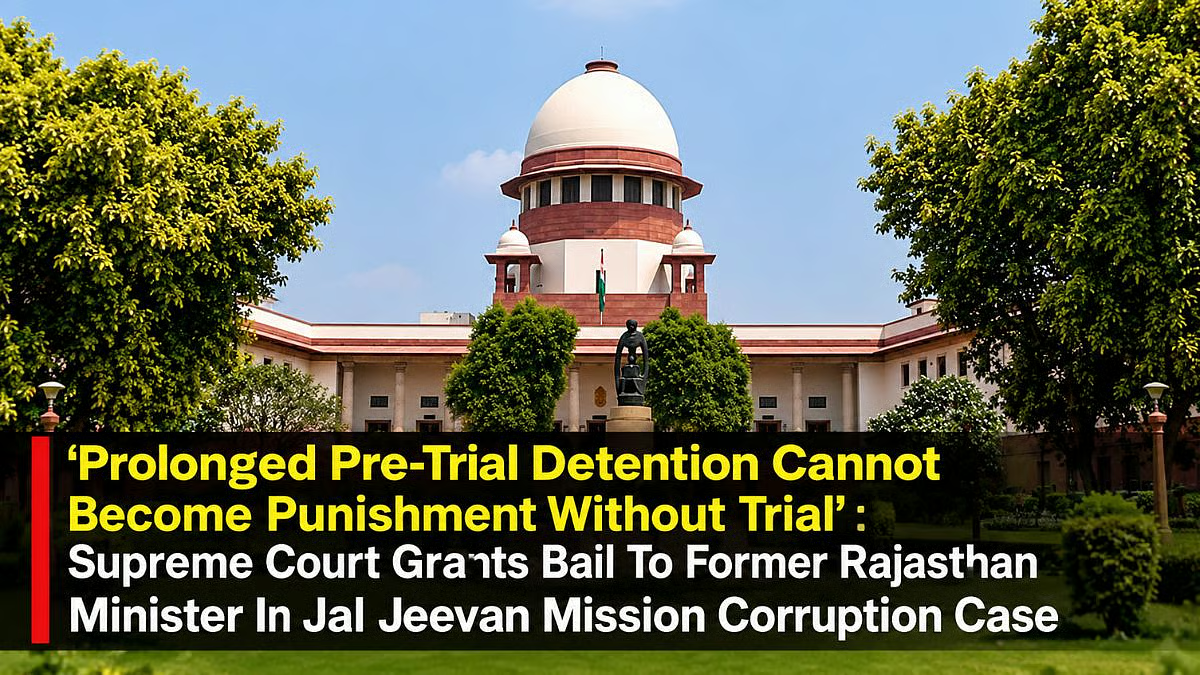
The Supreme Court has held that prolonged detention before trial cannot turn into punishment, stressing that personal liberty and a speedy trial must be safeguarded even where serious financial irregularities are alleged. A bench of Justices Dipankar Datta and Sheel Nagu made the observation while granting regular bail to former Congress minister Mahesh Chandra Joshi and Mukesh Pathak in a corruption case concerning tenders worth hundreds of crores of rupees under the Jal Jeevan Mission in Rajasthan, according to LiveLaw.
The bench said the allegations of large-scale irregularities and collusion in a public welfare project required careful scrutiny, but that their seriousness alone could not justify indefinite custody without trial. Quoting its earlier rulings, the Court observed that prolonged pre-trial detention cannot be allowed to become punishment in violation of an undertrial's fundamental right to personal liberty and speedy trial under Article 21 of the Constitution.
The Court noted that the investigation had been completed and chargesheets filed, with the prosecution's case resting largely on documents and electronic evidence already held by investigators. Further custodial interrogation or recovery was not needed from the two appellants, reducing concerns about tampering. Joshi, around 72, had been in jail since May 2026, while Pathak had been in custody since February 2026, yet charges were still not framed.
The case involves 22 accused, three chargesheets, 124 prosecution witnesses and roughly 20,000 pages of documents, a volume the bench regarded as a reason for the delay in trial.